
About Us
The Cultures of Disability & Health group studies the long history of disability to promote the inclusion and integration of disabled people into society. Here are some of the staff and students based at Manchester Metropolitan University, and our external members, who research into the experiences and cultures of disability and health, past and present.
Please contact us during the form at the bottom of the page if you wish to join or find out more.
Members
Rosamund Oates: Cluster Leader
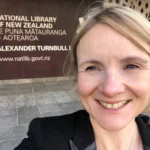
I am interested in the history of deafness and disability. I have received funding from Leverhulme and British Academy to examine the experiences of deaf people in Renaissance England, and I am writing a book, Silent Histories: Deafness, Hearing and Hearing Loss in Early Modern England.
I have published on the history of sign language, preaching and deaf people, and the legal status of deaf people and deaf artists. I am studying BSL. I enjoy collaborating with Deaf and disabled people’s organisations and exploring how to make disabled history more accessible.
Rob Ellis
Rob Ellis is a Professor of Modern British History with interests in the histories of mental health, learning 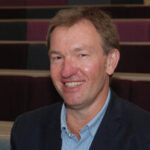 disability and institutions. He is currently the Principal Investigator on an AHRC-funded project Asylum: Refugees and Mental Health, which focuses on the wellbeing of Belgian refugees in Britain during the Great War. Partners on the project include Alexandra Palace, In Flanders Fields Museum, the London Archive and the Mental Health Museum, who will help to bring the research to life in meaningful and impactful ways.
Rob is also a Visiting Research Fellow at the Mental Health Museum and a Trustee at Pennine Heritage.
Michelle Walker: Assistant
Michelle is a historian of war and society, 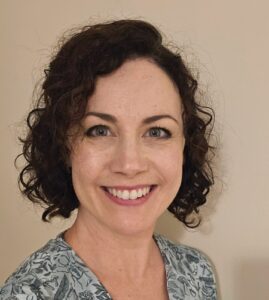 and she enjoys trying to understand the ways war shapes identity and nationhood. Her research focuses on everyday experiences of the Second World War, particularly in Scotland, and her current project is investigating expressions of dissent in the wartime industrial sector.
Outside of her WWII research, Michelle is an assistant to the Cultures of Disability group and an active champion for veterans, particularly those with mental or physical disabilities.
Gabriele Aroni
Dr Gabriele Aroni is Senior Lecturer in Games Art.  With a background in architecture, digital media, and communication, his research focuses on the visual semiotics of digital games, as well as the portrayal of cultural heritage.
As a burn survivor, he analyses the representation of scarred characters in digital games and how it relates to narrative and gameplay.
Anna Bergqvist
Dr Anna Bergqvist is a Reader in Philosophy and the Director of the Values-Based Theory Network at St Catherine’s College University of Oxford. Her research explores the philosophy of psychiatry and public mental health, with a special focus on shared decision-making.
Bergqvist is currently Co-Principal Investigator of the National Institute for Health research project: Improving the Experiences of African Caribbean Men detained under the Mental Health Act: A Co-Produced Intervention Using the Silences. This is one of four projects funded to provide evidence for government policymakers as they reform the Mental Health Act.
Lucy Burke
My research traverses the fields of literary and  cultural disability studies and the critical medical humanities. I focus on literary, cinematic, and theoretical writing on cognitive difference, dementia, learning disability, care and aging. I also explore the role of the arts in facilitating meaningful democracy and social justice for disabled people.
Recently funded projects include the AHRC Connected Communities D4D project (on which I was Co-principle Investigator) and my work as a consultant on the ACE Transforming Leadership programme with Access All Areas Theatre Company.
Grace Chapman
Dr Grace Chapman is the corporate historian at Reckitt, a consumer goods company focusing  on health, hygiene and nutrition. Some of Reckitt’s key brands include Dettol, Gaviscon and Nurofen. She has a responsibility for the global heritage archive and how the company tells its heritage story.
Grace received her PhD in Disability History from the University of Huddersfield in 2022 and worked at Selby Abbey, a major church in North Yorkshire, where she started as community heritage engagement coordinator before becoming the Appeals Director. She has an interest in public history and health histories.
Jason Crowley
Jason is a historian of the Ancient world. His main  research interest is the psychology of combat, particularly the close-quarters close-order combat favoured by the classical Greeks. His first book, The Psychology of the Athenian Hoplite: The Culture of Combat at Classical Athens (2012) applies modern theories of combat motivation to the ancient world, and subsequent publications have explored both the human experience of war and the effects war has on those who survive that experience.
Kathryn Hurlock
Kathryn is a historian of pilgrimage and war,  though not always at the same time. She is interested in the role of pilgrimage as a route to healing for the disabled, depictions of miraculous cures in medieval and modern texts, and the use of religion pilgrimage by veterans as a route to physical and psychological wellbeing.
She also researches combat stress in medieval warfare and has recently co-edited and contributed to Combat Stress in the Pre-Modern World (Palgrave, 2022) with Owen Rees and Jason Crowley.
Marcus Morris
Marcus Morris is a Senior Lecturer in Modern European History. His work is focused on labour and socialist movements in Britain and more widely. He has examined the response of those movements to the returning soldier, their disabilities, and the wider attitudes of the movement to issues around disability. Marcus also supervises a number of PhD students who examine issues of disability and the returning soldier, especially in the context of the First World War.
April Pudsey
Dr April Pudsey is a Reader in Roman History, and  also Associate Director of the Manchester Centre for Youth Studies. She is an expert in ancient demography, childhood and youth. She has published widely about the everyday lives, concerns and cultures of young people in antiquity, including on disease and infirmitas in the Roman world and cultural attitudes around the body. Her current book project explores the impact of ancient disease environments on health, wellbeing and the body.
Jane Stockdale
Dr Jane Stockdale is Curator of the Mental Health Museum in Wakefield.  Her PhD studied the role of museums for individuals with mental health conditions. This included examining collecting and representation within museums, and resulted in a greater understanding of co-production’s potential within the museum space, particularly when working with objects relating to people’s own lived experience.
Working alongside MMU, Jane hopes the rich collections at the Mental Health Museum offer many opportunities to expand research and inform museological practice. This includes forging understanding of a museum’s role in representing often silenced histories, challenging stigma or bringing empowerment.
Current PhD Students
Arlene Jackson
Arlene is doing a PhD in English and creative writing. She uses her experiences as a nurse and a writer to analyse cultural and literary representations of chronic illness and disability. She lives with ME (Myalgic Encephalomyelitis) and aims to represent lived experiences of readers with a chronic illness in the hope of empowering the voices of the community involved.
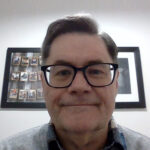 Noel Fagan
I am a Retired Learning Disability Nurse and am doing a PhD exploring ways in which both adults and children who have a learning disability can participate in creative writing activities. I also work with a local LD support organisation unearthing the life stories of adults with a learning disability who spent most of their childhoods and early adulthoods in long-stay institutions.

Sarah Hitchen
Sarah’s PhD is funded by the Arts and Humanities Research Council (AHRC) and explores early modern perceptions of mental disturbance, focusing on behaviours that are today associated with schizophrenia. She examines the experience of patients and their families and addresses the legal, medical and social responses to schizophrenia in the period.

Jemma Lakmaker
I am a PhD student researching the social integration of military veterans with service-induced hearing loss post 1918, and am funded by the Arts and Humanities Research Council (AHRC). My interest is in Disability History, predominantly hearing loss and the Deaf community. I am Level 3 proficient in British Sign Language.
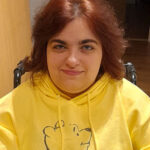
Nadia Tira
My name is Nadia Tira and I am a PhD student. My research examines the experiences of disabled veterans at the Hollywood canteen (a canteen run by the American Film Industry) and at other United Service Organizations (USO) establishments during the Second World War.
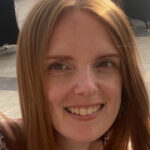
Nicola Smith
I am a PhD student and my research explores the hierarchy of disability and the social and cultural perceptions of disabled veterans in Lancashire between 1914-1925. It focuses on veterans with mental health (dis)orders and visual impairments and their place on the disablement hierarchy, and their social position relative to unemployed disadvantaged and disabled civilians.