
Legless in London: an Award-Winning Board Game exploring 19th-Century Disability
'Legless in London', an Award-Winning Board Game Inspired by the Cultural and Literary History of Disability in Nineteenth-Century Britain
Disability studies scholar Dr Ryan Sweet introduces the tabletop game he co-designed with Focus Games Ltd. and explains what he learnt from the experience.
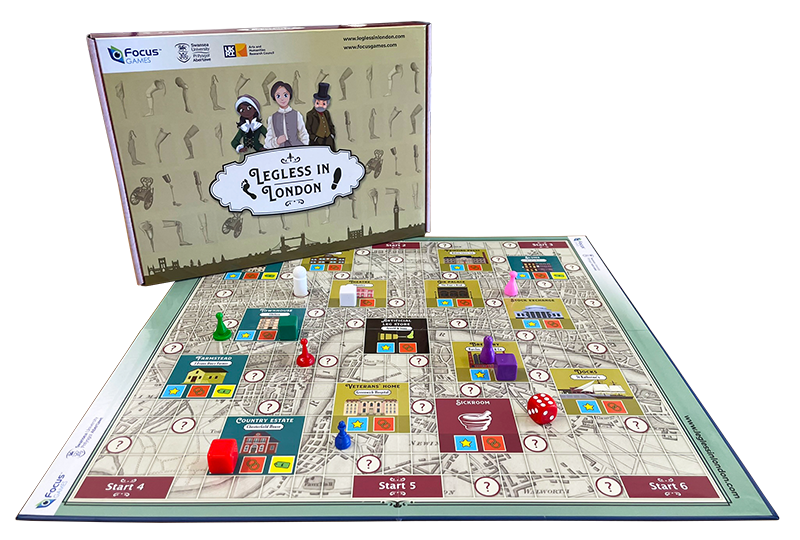
“Experience life as a lower-limb amputee in Victorian London! Achieve your goals as you navigate the streets, negotiate the job market, find love, buy property, and use artificial legs. Will you prioritise making your riches in the Stock Exchange or achieving your personal goal at the Country Estate? You decide in this role-and-move strategy game inspired by Ryan Sweet’s 2022 book Prosthetic Body Parts in Nineteenth-Century Literature and Culture.”
These lines, the game description for the 2025 Focus Games Ltd. board game Legless in London, provide a snapshot of what the playing experience of the game entails. But how did Legless in London come together? And what was learnt along the way?
Following the publication of Prosthetic Body Parts, I spent some time pondering what project I might turn to next but couldn’t shake the feeling I had unfinished business with Victorian prosthetics. Around this time, I noticed funding calls to enable researcher to engage new audiences with their findings. Outside of work, I found myself playing board games socially and observing the increasing presence of tabletop games in local highstreets through board game cafes and the growing shelf space dedicated to analog games in shops such as Waterstones. And then I started to connect the dots. Could I design a board game based on my research? Would anyone want to play this?
These questions led to some research in which I learnt how significantly the global market for tabletop games had grown since before the Covid-19 pandemic. I also learnt how despite this growth disability remained underrepresented in tabletop gaming. And I was struck by both the interest in board games from disabled and neurodivergent communities and how many existing games presented accessibility challenges for these groups.
To investigate these issues further, I brought together a focus group of members of the disabled community interested in tabletop gaming. Rich discussions with this group produced a set of inclusive design issues to consider for board games and a mandate to work together to create a game inspired by my book.
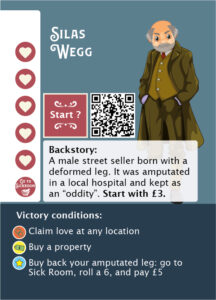
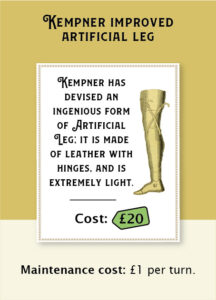
This then led to conversations with Focus Games Ltd., a serious games company with an impressive track record of developing engaging games from research ideas. Several funding applications, many workshops, and a lot of playtesting later and before we knew it Legless in London was a published product and on sale internationally.
Of the many lessons I learnt through the development of Legless in London, one of the most important was the value of working with the disabled community. Many of the design decisions we made were informed by our disabled focus group and were ones we may have gotten wrong if we hadn’t had their input. For example, the game title,
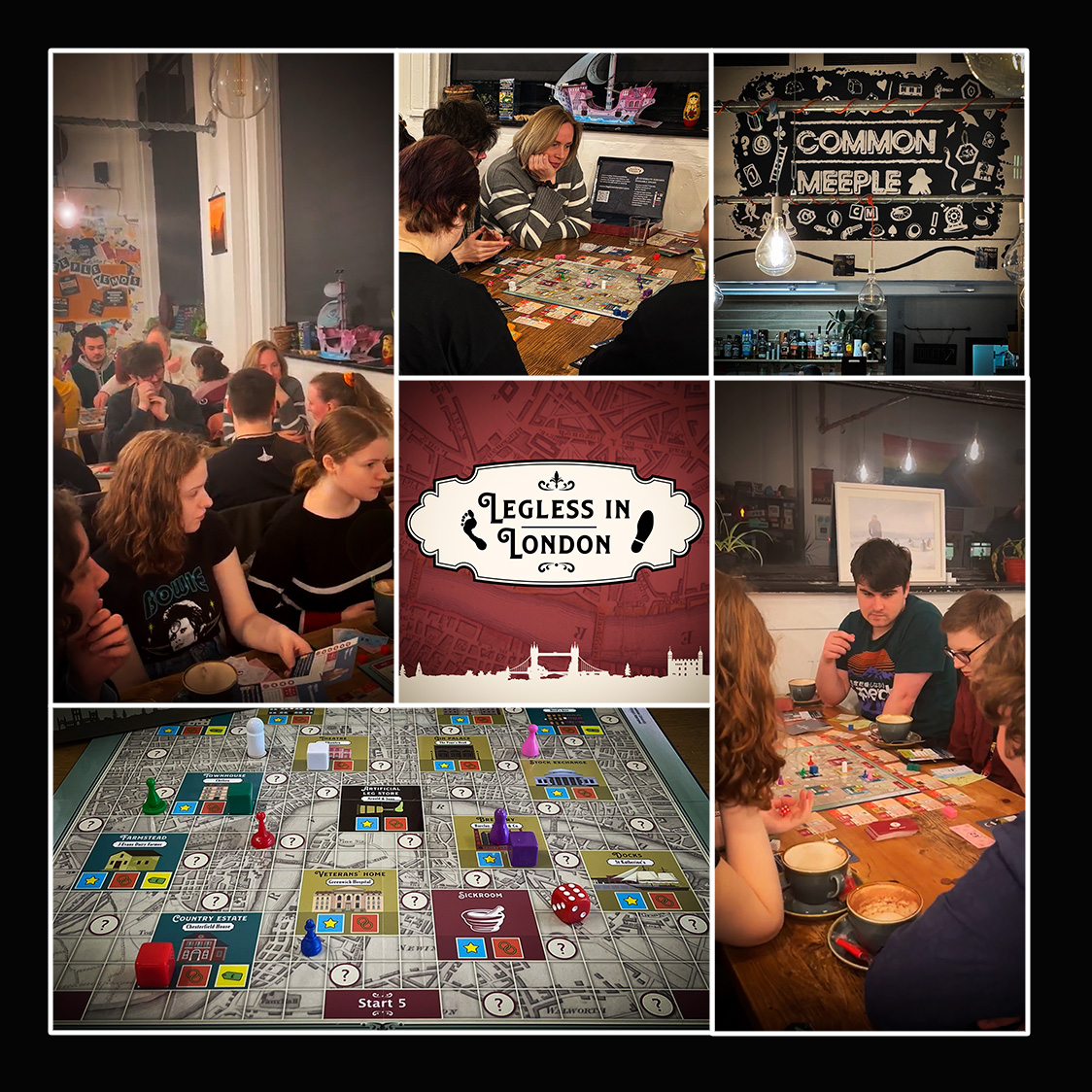
which is more risqué than the ones I initially pitched came out of these conversations. Our community members felt it was important to include humour and quirkiness within the game. Also, several of the accessibility features we included—for example, our screen-reader-friendly app and decision to use multi-way-differentiated counters rather than bespoke meeple—were informed by committed playtesting from our focus group and their wider networks.
The value of the design and development process as a means to distil translatable research ideas was another lesson I took from this project. To abstract several years of academic research and 90,000 words of historicist disability/literary studies research into an accessible game that could be played by most adults in under an hour was certainly challenging but also hugely generative. Like Prosthetic Body Parts, Legless in London encourages players to reflect on how disabled people were represented in the past and how this compares to today. Through exposing players to both the challenges and opportunities that a lower-limb amputee may have faced in nineteenth-century London, the game—like the book—also challenges the social dominance of physical normalcy and shows how in the past it was being challenged too.
Legless in London was supported by the Arts and Humanities Research Council [AH/X00354X/1, AH/Z506485/1] and is the result of collaboration between Swansea University and Focus Games Ltd. It won Best Board or Tabletop Game for Impact at the Games for Change Awards 2025. Legless in London is available to buy at the Focus Games online store and Amazon.

Dr Ryan Sweet is Lecturer in English and Creative Writing at the University of Plymouth, England. He is an expert in nineteenth-century disability and has published widely in this area. Ryan was previously Senior Lecturer in Humanities and Programme Director of the Humanities Foundation Year at Swansea University (2020–25) and inaugural Programme Director of the Humanities Foundation Year at Plymouth (2018–20).

Conference: 'Life Histories in Mind: Mental Ill Health and Learning Disability in Context', July 2026
Life Histories in Mind: Mental Ill Health and Learning Disability in Context
Date: 21 July 2026
Venue: Manchester Metropolitan University
In summer this year, Cultures of Disability and Health members Professor Rob Ellis and Dr Rebecca Ball hosted a conference examining life history, mental ill health and learning disability. The event was run in conjunction with departmental research groups Histories of Race, Gender, Sexuality, and Identity (RGSI), the Manchester Centre for Public Histories and Heritage, and Cultures of Disability and Health.
The keynote lecture was given by Professor Catharine Coleborne, a Visiting Professor of Mental Health History at Manchester Metropolitan University (June 2025-May 2028) and co-Director of the Centre for Society, Health and Care Research at the University of Newcastle (Australia).
Conference brief below:
The aim of the conference is to explore mental ill health and learning disabilities in the context of life and experiential histories. Early research in these areas focussed on biographies of relatively well-known medical practitioners, with details of their achievements in progressing the history of ‘care’ and treatment. Since the 1980s, scholars have attempted, with varying degrees of success, to prioritise the ‘voices’ of patients and service users with a view to capturing a more detailed and critical understanding of the past and present. As historical inquiry has moved into newer areas of analysis there is now a clearer understanding of the many individuals and groups, beyond those offered up by institutional and medical records, involved in treatment regimes. This includes the importance of life beyond the diagnosis. Allied to this has been the newer modes of storytelling that have arisen from online opportunities and creative partnerships between academics and specialists in other fields, including, artists, theatre practitioners, and heritage professionals. These efforts reflect the inter-and cross-disciplinary interest in life histories and the complexities of sharing them.
Within this broad framework, the conference seeks to reinvigorate the possibilities offered by life narratives (broadly defined) and their place within our understandings of mental health and illness and learning disability.
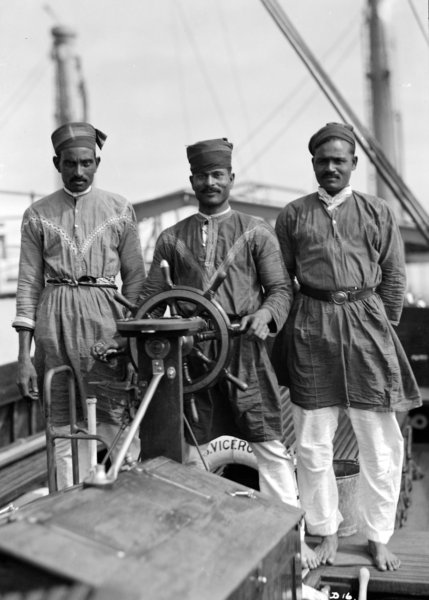
Sheik Sulleyman Adam: A Lascar’s Descent into ‘Madness’
Sheik Sulleyman Adam: A Lascar’s Descent into ‘Madness’
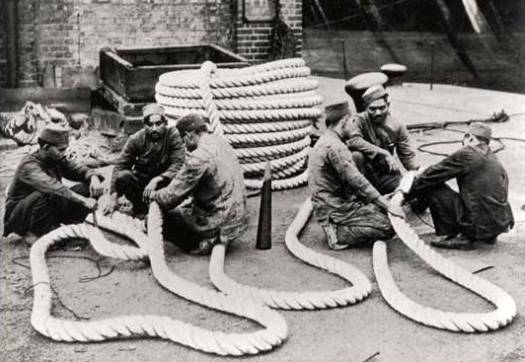
Here, PhD student Hasaam Latif traces the experiences of Lascar* seamen, working far from home under difficult conditions
*Lascars were sailors recruited predominantly in Southern and South-East Asia to work on British ships
In October 1910, a Lascar sailor named Sulleyman Adam stood at the centre of an appeal to the Home Office, pleading for his life after being sentenced to death in Glasgow for killing his superior officer during a violent altercation aboard ship. The plea portrayed not a hardened criminal but a frightened young sailor caught in circumstances of confusion, coercion, and despair.[1]
Adam’s story is one of thousands that expose the psychological toll faced by Lascars. They lived and worked under the most punishing of conditions. Lascars confined to the engine room, spaces of extreme heat, darkness, and overcrowding, were often likened to prisoners, their physical and social confinement contributing to a growing number of suicides.[2] The problem had become so severe that in 1908 it reached Parliament, where officials examined claims that fifty-eight Lascar firemen and trimmers had taken their own lives the previous year.[3] For many, the sea was not a route to opportunity but a passage into alienation and mental illness.
Adam’s case reveals this all too clearly. Unable to speak English fluently, he struggled to explain himself during his trial. He was sentenced to hang, but after urgent appeals, including one emphasising the “rigours of our climate,” his sentence was commuted to penal servitude for life.[4] Yet mercy offered little comfort. In the years that followed, Adam’s mental health deteriorated rapidly. Reports from Glasgow and later from Perth Prison described him as increasingly despondent and suicidal. “He has sometimes threatened to end his life,” one report noted, “and in a depressed mood, he might quite possibly attempt to do so.”[5]
The sources paint a portrait of a man unravelled by displacement. Cut off from those who shared his language or customs, Adam was utterly alone. Prison doctors noted his confusion and despair, linking his fits of depression to “homesickness,” a term that only begins to capture the psychological collapse caused by cultural isolation and the brutal cold of Scotland.[6] His repeated pleas to be returned to India, to the warmth and familiarity of home, were acts of both faith and desperation.
Eventually, the authorities relented. Adam was transferred to India, first to a special prison and later to the Lunatic Asylum at Ratnagiri.[7] There, his condition was recorded in minute detail by medical officers. At times he appeared rational, at others violent, incoherent, or hallucinatory.[8]
Adam’s long descent into mental illness, from the decks of a ship to the wards of an asylum, is not merely an individual tragedy. It speaks to the ways empire shaped minds as well as bodies, binding men from the colonies into systems that offered little understanding or care for their mental suffering. By bringing these histories to light, this research also challenges us to rethink how we understand mental health among colonial sailors, tracing its roots to systems of exploitation, displacement, and neglect.

Hasaam Latif is a PhD student at Durham University. His research explores the lives of Lascars in Britain and the British Empire, tracing how their experiences of displacement, labour, and mental illness reveal an often forgotten history of colonial seafaring and its human costs. Outside of his studies, you might find Hasaam on a walk, at the gym, or tucked away in a coffee shop, latte in hand.
Sources
[1] National Records Scotland (NRS), HH16/117, Letter from Mersey Mission to Secretary of State, 19 October 1910.
[2] Ravi Ahuja, “Capital at Sea, Shaitan Below Decks?” History of the Present 2, no. 1 (2012): 7, 78–85, https://doi.org/10.5406/historypresent.2.1.0078.
[3] Hansard, “Suicides of Lascars,” House of Commons Debate, vol. 198, 17 December 1908, https://hansard.parliament.uk/Commons/1908-12-17/debates/432f2217-7e02-4e70-b4b8-91ce3dfceea6/SuicidesOfLascars.
[4] NRS HH16/117, Letter about Reprieved Lascar, 4 November 1910
[5] NRS HH16/117, Letter from H.B. Simpson, 3 July 1911
[6] Ibid.
[7] Ibid.
[8] NRS, HH16/117, Notes of the Medical Officer and the Facts Observed by the Visitors of the Asylum, 16 January 1922.
Disability History at the House of Austrian History - 19 November 2025
Disability History at the House of Austrian History - 19 November 2025
Research Seminar co-hosted by Manchester Metropolitan University's Race, Gender, Sexuality and Identities Research Group and Manchester Centre for Public Histories and Heritage
Presented by Vansch Tautter, House of Austrian History

History museums often fail to tell the (hi)stories of people with disabilities. The House of Austrian History, as a national museum of contemporary history in Vienna, tries to change this through its collection and exhibition practices. This talk explores how the museum has adapted its object acquisition process to foster community participation, by including a focus group, oral history interviews and an interactive online exhibition. Additionally, it interrogates the physical and online exhibitions of the museum that use the collected objects. Finally, the talk critically engages with the meanings of these practices for the position of disability history in national heritage.
Vansch Tautter is an oral historian and curator at the House of Austrian History in Vienna. Their research focuses on disability history, cultural history and memory studies. The Disability History Project is funded by the Austrian Federal Ministry of Labour, Social Affairs, Health, Care and Consumer Protection.
Date: 19th November 2025
Time: 1pm-2pm
Book Here (A Teams link will be circulated to those who book in advance)
MMU Disability Reading Group - Meeting 2: 24 Oct
Manchester Metropolitan University Disability Reading Group - Meeting 2: 24 October 2025
Advertising the regular meetings of the Disability Reading Group, a collaborative, inclusive group that meets monthly to discuss texts considering disability. The group was established by Arlene Jackson, a PhD student with the School of History, Politics and Philosophy at Manchester Metropolitan University. Everyone welcome.

Meeting 2: Friday 24 October at 1:30pm via Teams.
Chapters 1, 3, 25, 27, 38 (Read as much or as little as you wish) from The Disability Studies Reader by Lennard J. Davis (5th edn) Routledge
The selected text is The Disability Studies Reader by Lennard J. Davis. If you have any difficulty accessing the book, please contact Arlene Jackson to arrange access. You can do so by going to this page, and clicking on Arlene's profile picture (bottom left), which will open an email.
Please register by contacting Arlene or leaving a comment below, and we will send through a Teams link in advance of the meeting.
Imperial Pensioners: Exploring the care of Disabled Great War Veterans across the British Empire
Imperial Pensioners: Exploring the care of Disabled Great War Veterans across the British Empire
In this blog post, Dr Michael Robinson introduces an underexplored archival source that reveals much about the care of disabled veterans of the Great War
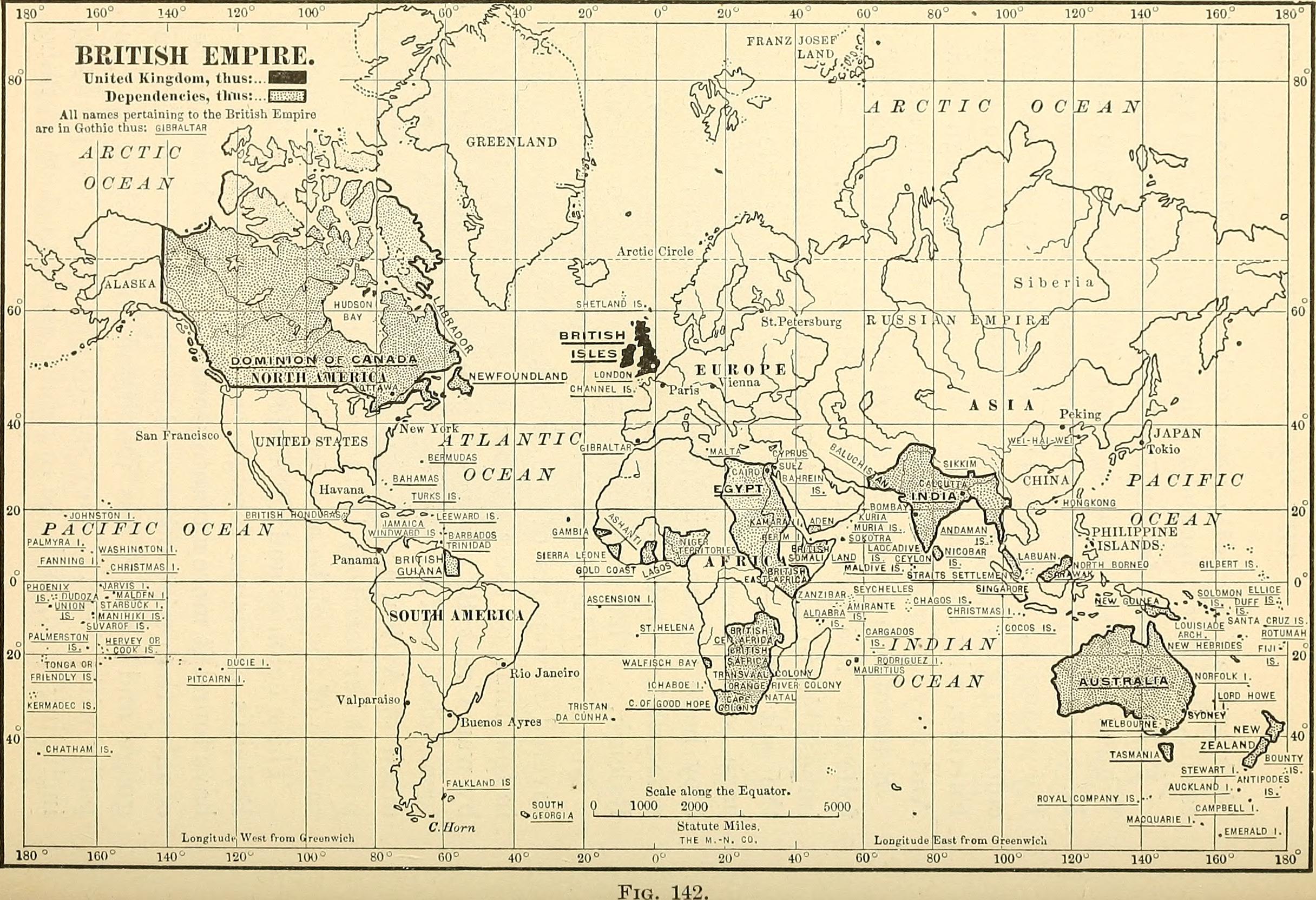
Seven years after the Armistice at the end of the First World War, the British state sanctioned a worldwide audit of British disabled Great War veterans residing across the British Empire. An estimated 23,000 veterans of the British Armed Forces, referred to as ‘Imperial Pensioners’, received a disability pension and remained eligible for medical/rehabilitative care funded by the British state. Imperial Pensioners were often migrants who left Britain after their war service. Crucially, overseas medico-welfare officials distributed disability pensions and provided medical care as agents on behalf of the British state. This blog post will examine the experiences of one of those agents acting as emissary, a Mr G. F. Gilbert.
As a seasoned civil servant with extensive experience working for the Treasury and the Ministry of Pensions, Gilbert was the ideal choice as auditor on behalf of the British state. Between 1925 and 1926, Gilbert visited Australia, South Africa, India, Malta, the British West Indies, Nyasaland, Southern Rhodesia, Northern Rhodesia, Kenya, Zanzibar, Uganda, Tanganyika, New Zealand, Seychelles, Fiji, Egypt, Palestine, and Sudan. During this epic global tour, Gilbert met with overseas agents to discuss Imperial Pensioners. He also visited medical sites such as artificial limb factories, ‘lunatic asylums’, and out-patient clinics, which sometimes included interactions with Imperial Pensioners receiving care.
Though undertaking an audit for the British government, Gilbert appeared keen to reduce interaction with British veterans. Instead, his lengthy reports contained intensely detailed reports and statistics detailing how imperial countries treated their own disabled veterans. This surveillance enabled Gilbert and his colleagues in London to assess and compare how other countries addressed the complex issue of compensating, rehabilitating, and reintegrating veterans into society.
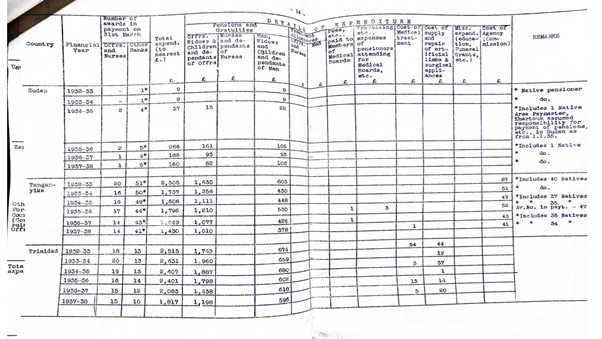
Gilbert’s observations reveal the complex and subjective nature of disability care and compensation on offer across British imperial territories. Subjective individual variations shaped the treatment of disabled veterans. Rather than a ‘one size fits all’ picture, where all veterans were treated alike, the specific disability diagnosis, race, nationality and location of a veteran dictated their experience. Indeed, the reports even offer compelling insights into the comparative treatment of colonial veterans in overseas territories. This unique insight appears perfectly positioned to contribute to the recent attention dedicated to uncovering the stories of colonial veterancy. This includes, for example, Professor Dónal Hassett’s COLVET project which examines veterancy in the French, British, Italian and American Empires, and a special journal edition published by First World War Studies in 2019.
Gilbert’s reports also reveal the immense transnational exchange of ideas and veterans amongst imperial territories. Indeed, regarding the latter, British veterans with life-altering war-related disabilities were clearly willing to migrate thousands of miles in search of a better life. Their proactive agency reinforces how disabled veterans in past societies were active and mobile, which can help counter the stereotype of them being inactive and stationary recipients of government welfare and charitable assistance. As the study of disabled veterans enters its second generation, historians are now better placed to dig deeper into these vital subjective variables, which dictated post-war experiences of veteranhood. Gilbert’s lengthy reports, alongside the hundreds of individual pensioner files of ‘Imperial Pensioners’, currently held in the National Archives of England and Wales, provide a treasure trove for historians of disability, veterans, and the British Empire to explore.
Dr Michael Robinson is a National Army Museum Research Fellow at the University of Birmingham. He enjoys travelling, watching football and complaining about politics. His research on Gilbert’s world tour has been published in the Social History of Medicine and the Journal of the History of Medicine and Allied Sciences.