
Legless in London: an Award-Winning Board Game exploring 19th-Century Disability
'Legless in London', an Award-Winning Board Game Inspired by the Cultural and Literary History of Disability in Nineteenth-Century Britain
Disability studies scholar Dr Ryan Sweet introduces the tabletop game he co-designed with Focus Games Ltd. and explains what he learnt from the experience.
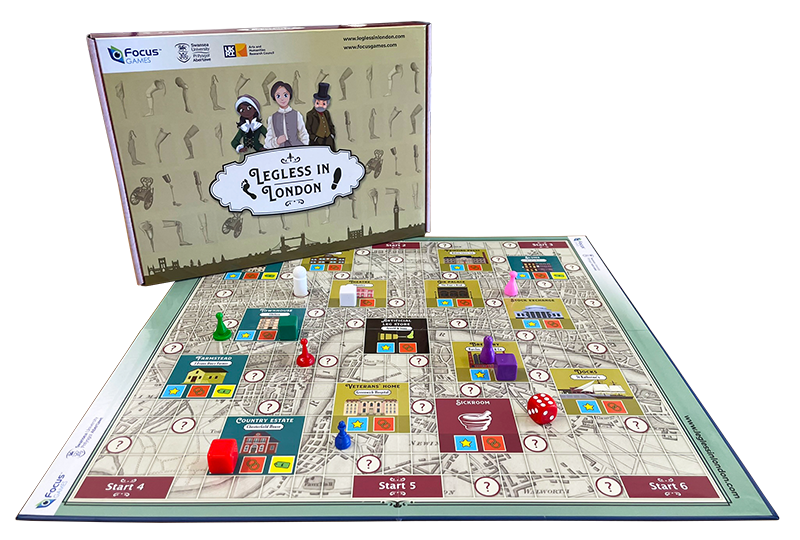
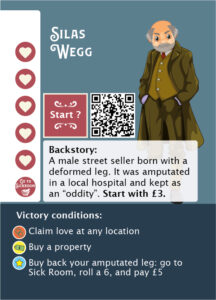
“Experience life as a lower-limb amputee in Victorian London! Achieve your goals as you navigate the streets, negotiate the job market, find love, buy property, and use artificial legs. Will you prioritise making your riches in the Stock Exchange or achieving your personal goal at the Country Estate? You decide in this role-and-move strategy game inspired by Ryan Sweet’s 2022 book Prosthetic Body Parts in Nineteenth-Century Literature and Culture.”
These lines, the game description for the 2025 Focus Games Ltd. board game Legless in London, provide a snapshot of what the playing experience of the game entails. But how did Legless in London come together? And what was learnt along the way?
Following the publication of Prosthetic Body Parts, I spent some time pondering what project I might turn to next but couldn’t shake the feeling I had unfinished business with Victorian prosthetics. Around this time, I noticed funding calls to enable researcher to engage new audiences with their findings. Outside of work, I found myself playing board games socially and observing the increasing presence of tabletop games in local highstreets through board game cafes and the growing shelf space dedicated to analog games in shops such as Waterstones. And then I started to connect the dots. Could I design a board game based on my research? Would anyone want to play this?
These questions led to some research in which I learnt how significantly the global market for tabletop games had grown since before the Covid-19 pandemic. I also learnt how despite this growth disability remained underrepresented in tabletop gaming. And I was struck by both the interest in board games from disabled and neurodivergent communities and how many existing games presented accessibility challenges for these groups.
To investigate these issues further, I brought together a focus group of members of the disabled community interested in tabletop gaming. Rich discussions with this group produced a set of inclusive design issues to consider for board games and a mandate to work together to create a game inspired by my book.

This then led to conversations with Focus Games Ltd., a serious games company with an impressive track record of developing engaging games from research ideas. Several funding applications, many workshops, and a lot of playtesting later and before we knew it Legless in London was a published product and on sale internationally.
Of the many lessons I learnt through the development of Legless in London, one of the most important was the value of working with the disabled community. Many of the design decisions we made were informed by our disabled focus group and were ones we may have gotten wrong if we hadn’t had their input. For example, the game title,
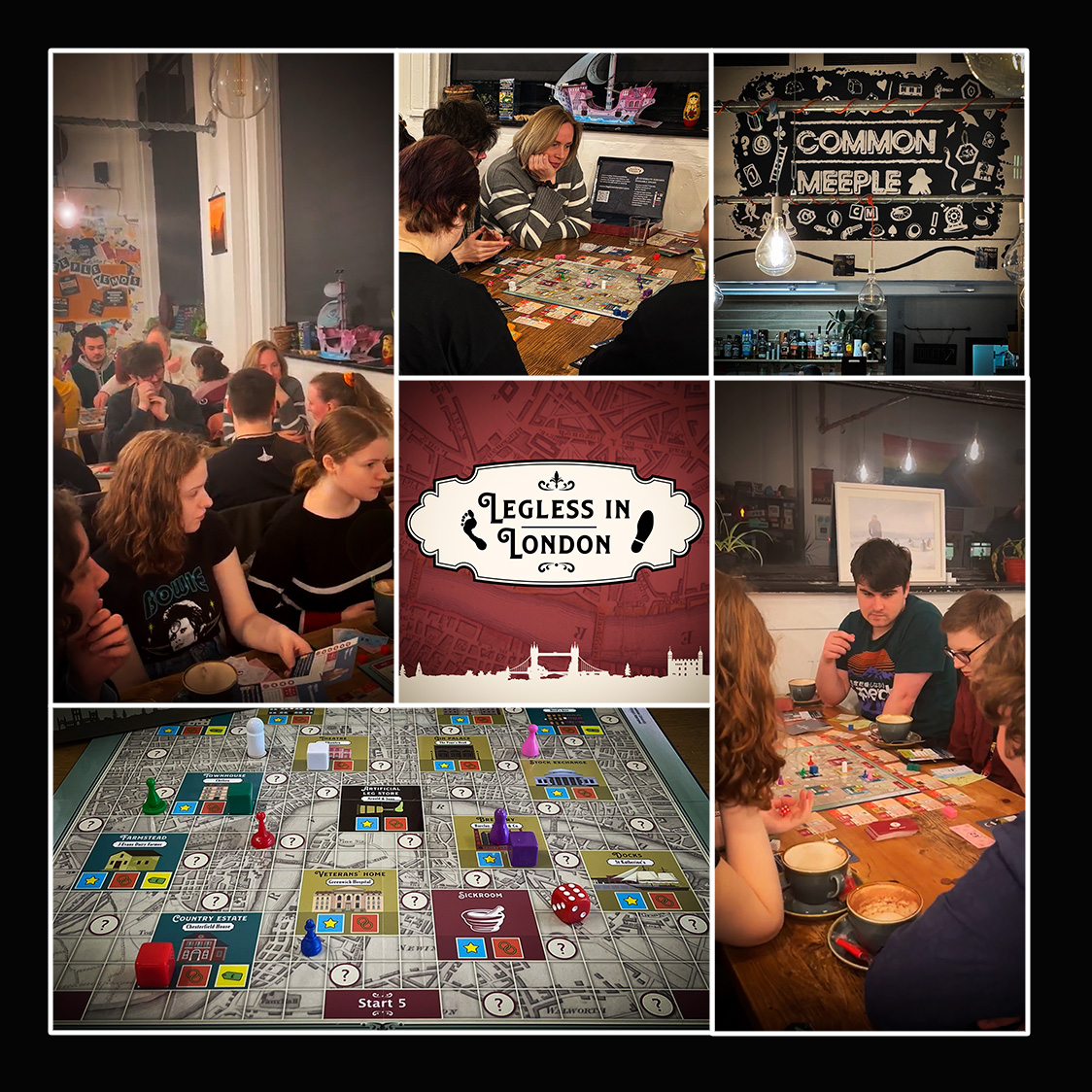
which is more risqué than the ones I initially pitched came out of these conversations. Our community members felt it was important to include humour and quirkiness within the game. Also, several of the accessibility features we included—for example, our screen-reader-friendly app and decision to use multi-way-differentiated counters rather than bespoke meeple—were informed by committed playtesting from our focus group and their wider networks.
The value of the design and development process as a means to distil translatable research ideas was another lesson I took from this project. To abstract several years of academic research and 90,000 words of historicist disability/literary studies research into an accessible game that could be played by most adults in under an hour was certainly challenging but also hugely generative. Like Prosthetic Body Parts, Legless in London encourages players to reflect on how disabled people were represented in the past and how this compares to today. Through exposing players to both the challenges and opportunities that a lower-limb amputee may have faced in nineteenth-century London, the game—like the book—also challenges the social dominance of physical normalcy and shows how in the past it was being challenged too.
Legless in London was supported by the Arts and Humanities Research Council [AH/X00354X/1, AH/Z506485/1] and is the result of collaboration between Swansea University and Focus Games Ltd. It won Best Board or Tabletop Game for Impact at the Games for Change Awards 2025. Legless in London is available to buy at the Focus Games online store and Amazon.

Dr Ryan Sweet is Lecturer in English and Creative Writing at the University of Plymouth, England. He is an expert in nineteenth-century disability and has published widely in this area. Ryan was previously Senior Lecturer in Humanities and Programme Director of the Humanities Foundation Year at Swansea University (2020–25) and inaugural Programme Director of the Humanities Foundation Year at Plymouth (2018–20).
